
Day: March 17, 2025

Six Sites Added to India’s Tentative UNESCO World Heritage List

Union Minister Gajendra Singh Shekhawat revealed six new sites during a Lok Sabha session on March 7, 2025 as per UNESCO’s World Heritage Centre to be placed on India's tentative list. The tentative list of sites now includes the Mudumal Megalithic Menhirs in Telangana and palace-fortresses from the Bundelas in Madhya Pradesh and Uttar Pradesh as well as Kanger Valley National Park in Chhattisgarh and Ashokan Edict Sites along Mauryan Routes along with Chausath Yogini temples and Gupta temples from north India. The new sites on India’s tentative list now total 62 entities which serve as prerequisites for UNESCO World Heritage List nomination.

New Sites Added to the Tentative List:

  1. Mudumal Megalithic Menhirs (Telangana): At Mudumal in Telangana prehistoric eminent field markers stand as monolithic stone structures named Mudumal Megalithic Menhirs.

  2. Palace-Fortresses of the Bundelas (Madhya Pradesh & Uttar Pradesh): The Bundela Rajput dynasty built Palace-Fortresses of the Bundelas across Madhya Pradesh and Uttar Pradesh which merge cultural and defensive elements of their society.

  3. Kanger Valley National Park (Chhattisgarh): The Kanger Valley National Park in Chhattisgarh functions as both a biodiversity hotspot and a distinctive region that includes unique flora and fauna as well as limestone caverns.

  4. Ashokan Edict Sites along the Mauryan Routes (Multiple States): Ashokan Edict Sites situated throughout the paths constructed by the Mauryans (Multiple States) provide crucial documentation from Emperor Ashoka about Buddhism propagation and administrative order.

  5. Chausath Yogini Temples (Multiple States): Multiple Indian states contain ancient Chausath Yogini Temples that present unique examples of Tantric cultural heritage from India.

  6. Gupta Temples in North India: The Gupta Temples throughout North India presented both remarkable architectural masterpieces as well as sculptural achievements that characterizes the Gupta period often called the pinnacle of Indian artistic achievement.

Significance of the Tentative List:

  • Future UNESCO World Heritage List nominations require members to exist on the tentative list in the first place.

  • India currently holds position 62 on this list while showcasing multiple cultural elements and natural sites across its territory.

  • These sites gain enhanced international recognition together with better preservation capabilities along with better funding possibilities through this list.

Current Status of India’s UNESCO World Heritage Sites:

  • Currently, the UNESCO World Heritage List includes 43 distinctive properties.

  • Categorization:

    • 35 Cultural Sites

    • 7 Natural Sites

    • 1 Mixed Site (Both Cultural & Natural Significance)

  • The Moidams of the Ahom Dynasty received the UNESCO tag in 2024 becoming the newest addition to the list of heritage sites.

Government Initiative and Future Plans:

  • The Ministry of Culture and Tourism remains dedicated to expanding the list of sites for nomination.

  • Heritage tourism along with conservation initiatives represents the main focus of the Indian government.

Conclusion

India's preliminary UNESCO list now includes six additional sites which demonstrate both historical and cultural and natural richness spread throughout the nation. Through this step India can expand its global heritage assessment while opening potential opportunities for conservation and sustainable tourism development. Strategic government initiatives are expected to bring additional sites to reach the UNESCO World Heritage status which will strengthen India's cultural heritage standing worldwide.

Gomira Dance: A Masked Ritual of North Bengal

Traditional masked dances of Gomira originated from North Bengal where religious scholars link it to Mahayana Buddhism alongside animistic cult practices in the area. Male dancers perform Gomira dance to worship village deities and introduce beneficial powers and dismiss malevolent spirits. The Gomira dance stands as a fundamental facet of North Bengal village culture and religion which occurs mainly during the Baisakh-Jyestha-Asarh period (mid-April to mid-July).

Origins and Significance

  • The Gomira dance represents a cultural amalgamation between Buddhist religious practices and local animist beliefs alongside Hindu folklore traditions.

  • The linguistic origin of "Gomira" comes from two terms "Gram Chandi" and "Gram Thakur" which refer to rural Bengal's local deities.

  • Worshippers perform this ritual dedication directly to the deity so the deity can bestow blessings for abundant harvests and secure them against evil elements of nature.

  • Various materials including papier-mâché alongside sholapith (Indian cork), bamboo, wood, sponge wood, clay and paper comprise the dance masks.

  • Traditionally the family-based practice of creating masks remains a strictly male domain which family members have transmitted through the generations.

  • Traditional musical performance consists of Dhak drum and Kansar cymbals without any song or chant accompaniment.

Performance and Ritual Timing

  • The Gomira dance occurs mostly from April to July (during Baisakh-Jyestha-Asarh festivals).

  • Throughout the community a Gomira dance performance takes place at least once at a communal facility located either near the temple or an open field.

  • The dancers, all male, wear elaborate masks depicting deities, demons, and mythological characters.

  • During the dance performance actors display a symbolic battle while the performance showcases the unending conflict between good and evil forces.

Cultural and Social Significance

  • Gomira dance presents a visualization of divine victory over evil which reflects an essential concept in traditional Indian dance expressions.

  • The practice of social bonding through this tradition leads to the development of community identity along with collective participation.

  • The performance consists of spiritual elements which were traditionally used according to Hindu and Buddhist mythological rituals to protect against harmful spiritual energies through masked ceremonies.

  • Through performance events that use masks and dance people support both handmade craft work and spoken traditions as they maintain their cultural heritage.

Global Parallels

  • The Tibetan Cham dance shows close similarities to Gomira because both dances have Buddhist origins and employ complex masks.

  • Japanese Noh theatre displays stylized masks yet exists as a classical art tradition instead of being a traditional community event.

  • The South American Carnival events display mask-based spectacles which differ from Gomira because they are focused on celebration instead of Ritual purpose.

Comparison with Other Masked Dance Traditions in India

Region

Masked Dance Tradition

Similarities

Differences

Odisha

Chhau Dance (Mayurbhanj, Purulia, Seraikela)

Use of masks, mythological themes, battle sequences

Chhau involves acrobatics and martial movements, whereas Gomira is more ritualistic

Himachal Pradesh

Kinnauri Nati Dance

Use of elaborate masks, religious themes

Nati is a slow dance, whereas Gomira is energetic and dramatic

Karnataka

Bhoota Kola

Worship of spirits, performed at village festivals

Bhoota Kola is a trance-based spirit dance, not purely theatrical like Gomira

Kerala

Theyyam

Masks, spiritual invocation, performed in village shrines

Theyyam involves intense devotion and sometimes fire-walking

Conclusion: A Living Heritage

Gomira represents a sacred communal ritual which combines sacred beliefs with artistic traditions as well as social unity through its performances. The folk dance maintains its symbolic status as a marker of North Bengal identity despite urban growth and decreasing numbers of its performers.

Bodo Peace Accord 2020: Boosting Stability, Autonomy & Growth

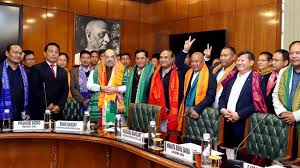
The Government of India together with Bodo groups and Assam state administration signed the Bodo Peace Accord to bring everlasting peace to Bodoland. The Third Bodo Peace Accord signed on January 27, 2020 became the newest variant of this peace treaty. Addressing members at the concluding session of the 57th All Bodo Students’ Union (ABSU) annual conference Home Minister Amit Shah expressed his remarks to attendees. The government will execute the full implementation of the Bodoland Territorial Region (BTR) peace agreement by the next two years according to his words. The minister stressed that drugs faced stiff government resistance by acknowledging the recent arrests conducted in both Imphal and Guwahati.

Formation of the Bodoland Territorial Region (BTR)

  • Through reorganizing institutional frameworks the BTR introduced an administrative structure that granted more autonomy to management activities than the previous Bodoland Territorial Autonomous Districts (BTAD).

  • The Bodoland Territorial Council (BTC) acquired additional powers to create legislation as well as execute, administer and handle finances.

Recognition of Bodo Identity

  • Through official government mandate Bodo received recognition as an associate state language of Assam.

  • Bodo culture together with language and its heritage received protection measures through this agreement.

Previous Bodo Accords

  • First Bodo Accord (1993)

    • Through the agreement the Bodoland Autonomous Council (BAC) formed, yet the Bodos remained dissatisfied with its final outcome.

  • Second Bodo Accord (2003)

    • The Bodo Territorial Council (BTC) received its establishment through the Sixth Schedule of the Constitution.

Key highlights 

Transformation of Bodoland

  • Severe separatist violence in this region has evolved into a society based on development.

  • The tricolor flag waving today represents youth who used to fight in battlefields before.

Economic and Cultural Recognition

  • Through the 'One District One Product' scheme 'Mushroom from Bodoland' has become accessible to Delhi consumers.

  • The Bodo products have achieved eleven GI Tag certifications together with their first eleven products receiving this certification.

  • The employment sector grew after 400 Bodo youths joined the Assam Commando Battalion.

Major Government Initiatives

Educational Progress

  • Through the Absolute Academic Services Unit students received the opportunity to complete 12th-grade examinations using Bodo language tests.

  • The recognition and acceptance of the Bodo language as an official language now protects its existence for upcoming generations.

Peace and Security Measures

  • The BTR peace deal stands at 82% completion rate and officials predict it will be totally executed in the next two years.

  • The Indian government took away the Armed Forces (Special Powers) Act (AFSPA) from the whole area of BTR beginning April 1, 2022.

Sports and International Recognition

  • Bodoland demonstrated success by organizing the Durand Cup which highlighted its maintained peaceful environment.

  • Through governmental backing the Indian administration plans to provide assistance to Bodo athletes as they prepare for the 2036 Olympic Games which will take place in India.

Economic Development

  • ₹1,500 crore allocated for Bodoland’s development.

  • The region develops industrially through recognition of GI tags along with highlighting local products.

Rehabilitation and Skill Development

  • ànashastra Sena of Dooars and Liberation researched and utilized ₹287 crore of public funds to provide support programs for 4,881 individual former NDFB members.

  • Local communities receive empowerment through animal husbandry, fisheries, and horticulture skill development programs which involve NGOs as implementers.

Infrastructure and Investment

  • During his leadership of an Investment Summit PM Modi secured investments worth ₹5 lakh crore for Assam.

  • The infrastructure growth initiative intends to train Bodo youth for world market demands.

Social and Cultural Acknowledgment

  • Through events with nine insurgent groups more than 10,000 militants have transitioned into societal structures.

Religious and Cultural Significance

  • The Bathou religion received official recognition from the government through the recognition of its linkage with the five natural elements (Panchatatva).

  • The Bodo cultural heritage receives support through preservation initiatives

Conclusion

The Bodo Peace Accord of 2020 functions as an essential pact that helps achieve stability together with autonomy and development within Bodoland. Through its establishment of peace and economic evolution along with Bodo ethnic maintenance the agreement created foundations for enduring growth. The government's dedication to complete implementation transformation leads Bodoland into becoming a prosperous region that focuses on education alongside industrial sector development and cultural protection. Despite ongoing difficulties the agreement provides an indispensable framework which will enable Bodo people to create a bright peaceful environment for their upcoming generations.

Tamil Nadu’s Mangrove Cover Growth and Carbon Stock: 2024 Report

The mangrove forest area in Tamil Nadu expanded significantly during 2021 through 2024 with a growth from initial 4,500 hectares to final 9,039 hectares. The growth of mangrove forests in Tamil Nadu has doubled because of both afforestation programs and successful initiatives to protect existing mangrove areas according to Anna University’s Centre for Climate Change and Disaster Management report. These ecologies normally exist in heat-bearing regions that lie between 32 degrees north and 38 degrees south.

District-Wise Mangrove Distribution

A study under 'Blue Carbon Monitoring for Mangroves of Tamil Nadu' document presents statistical details about mangrove spread across several important districts

  • Tiruvarur: Largest mangrove area with 2,142 ha (1,470 ha existing + 672 ha new plantations)

  • Thanjavur: 2,063 ha (1,209 ha natural + 854 ha plantations)

  • Cuddalore: 1,117 ha

  • Nagapattinam: 1,021 ha

This region contains a major percentage of the mangrove resources across the state of Tamil Nadu. According to the report mangroves occur in both Villupuram and Tiruvallur districts yet at reduced density levels when compared to other areas.

Carbon Storage and Climate Impact

  • Mangroves function as crucial carbon traps during climate change by absorbing excess carbon from the environment. The document examines the amount of carbon mangroves can store.

    • Cuddalore: 249 tonnes/ha

    • Tiruvarur: 145 tonnes/ha

    • Thanjavur: 77.5 tonnes/ha

    • Villupuram: 2.59 tonnes/ha

    • Tiruvallur: 13.1 tonnes/ha

  • Mangrove forests with dense woodlands act as important carbon storage deposits that hold carbon from the air while accumulating it in plant materials and soil components to slow down climate transformations.

What are Mangroves? 

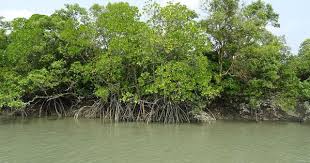
  • Mangroves are tree species which thrive in intertidal salines near river delta coasts along seashores since they can withstand regular floods and absorb fresh water from both rivers and ocean salts.

Features of Mangroves

  • These adaptable plants have roots which suspend from the surface as they tolerate high salt concentrations in the surrounding waters.

  • These plants evolved in intense salty environments thus they maintain salt resistance.

  • The plants use their leaf tissue to produce salt which regulates their salt-water absorption.

  • The roots of their system now expand as pneumatophore (or aerial roots).

  • The plant communities demonstrate strong tolerance against hot environmental conditions.

  • The plants reproduce through vivipary.

Mangroves around the world

  • Mangrove ecosystems grow naturally in the tropics between the 32 degrees north and 38 degrees south geographical regions.

Mangroves in India

  • Indian mangrove forests exist in all coastal areas where sheltered creeks and backwaters meet the sea and add to salt marsh regions.

  •  History recounts that the Earth's biggest mangrove forests spread across the alluvial river deltas of Ganga, Godavari, Krishna, Cauvery and Andaman and Nicobar islands.

Significance of Mangroves

  • The ecosystem produces exceptionally well and contains abundant biodiversity.

  • Marine species have lodging space within these habitats while young marine animals find essential breeding zones in these areas.

  • The marine environment contains many different species which include various fish accompanied by reptiles including sea turtles along with land turtles and alligators and crocodiles and caimans as well as snakes and lizards and numerous types of invertebrates such as shrimp and crabs and oysters and tunicates and sponges and snails and insects.

  • Through their thick network of roots mangroves establish firm grip on sediments that flow through rivers and erode from the land surfaces.

  • These coastal vegetation act as stabilizers to defend against coastal erosion caused by waves and storm activities.

  • Mangroves defend coastal structures from major storms and high waves as well as storm surges and cyclonic conditions.

  • The habitats routinely encounter tidal waves which resulted in the development of tidal wave tolerance among its inhabitants.

Threats to Mangroves

  • Mangroves face threats from two categories: 

A. Natural elements and

B. Human-caused sources. 

  • The loss of Indian Mangrove Forests reached above 50 percent during the past four decades. The primary threats towards mangrove forests consist of:

A. Natural Threats

  • Natural disasters which include cyclones and tsunamis have resulted in substantial destruction throughout the affected areas.

B. Anthropogenic Threats

  • Clearing of these forests for agricultural purposes, human settlements, infrastructure (such as harbours), and industrial areas.

  • The demand for these trees exists for wood and fodder production.

  • The practices of taking too much of forest resources have caused the forests to decrease in size.

  • The habitat area of these trees became excessively salty because of dam construction making it impossible for the trees to survive.

  • The cutoff of water into the river caused the area to become dry.

  • The application of agricultural field chemicals together with industrial waste including pesticides and fertilizers and other chemical substances leads to death of forest-dwelling animals.

  • The trees become suffocated because of oil contamination.

  • Global warming together with climate change threatens the equilibrium through rising sea levels and disrupts the sensitive system of the environment.

Way Forward:

  • Eco-tourism and Carbon Credit Programs: Encouraging sustainable livelihoods through eco-tourism and carbon credit trading.

  • District-Specific Conservation Strategies require local ecological conditions to develop individualized conservation programs for each area.

  • A balanced approach requires that 40.1% of planted mangroves must match the 59.9% of existing forested mangrove areas.

Conclusion

Tamil Nadu successfully increased its mangrove cover making an enormous ecological stride which demonstrates the state's firm dedication to environmental conservation and climate action. Proper management of sustainable initiatives alongside continued afforestation will improve Tamil Nadu's role in carbon sequestration and coastal ecosystem preservation.

U.S. Airstrikes on Houthis in Yemen Escalate Regional Tensions

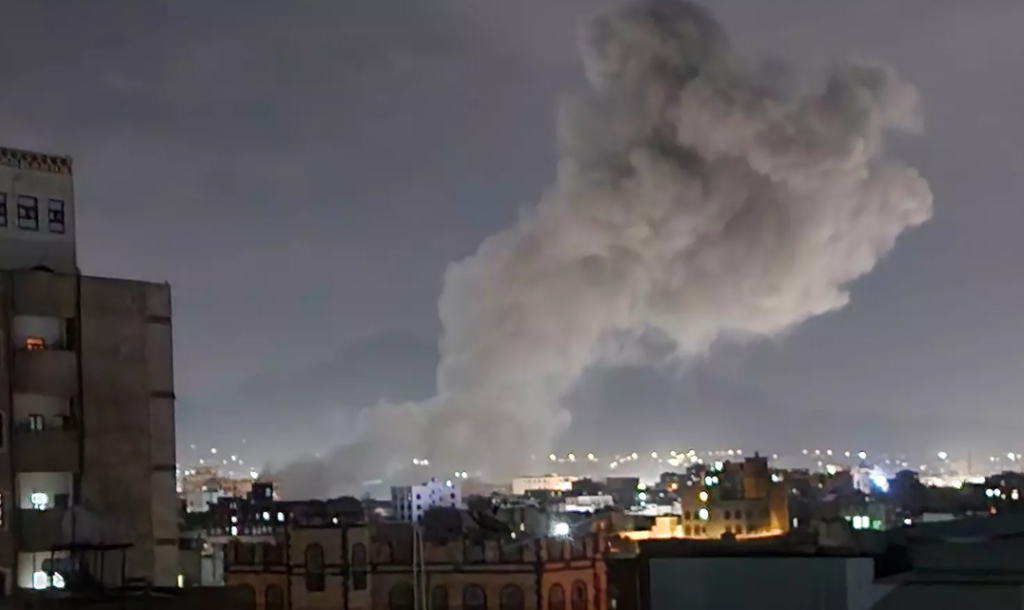
The U.S., under former President Donald Trump, launched airstrikes on Houthi-controlled areas in Yemen, killing 31 people, including civilians. Yemen’s strategic location along the Red Sea makes it vital for global trade, with nearly 10% of worldwide commerce passing through its waters. The Houthis, a Zaidi Shia rebel group, retaliated by targeting a U.S. aircraft carrier, escalating tensions. Iran condemned the attacks as illegal. The conflict disrupts oil prices and global shipping, increasing regional instability. As unrest persists, international mediation is needed to prevent further escalation and mitigate economic and security risks in the Middle East.

Introduction: 

  • The U.S., under former President Donald Trump, launched airstrikes on Houthi-controlled areas in Yemen, killing 31 people, including civilians.

Yemen: Geopolitical Significance

  • The southwestern Arabian Peninsula location of Yemen provides the country effective control over Red Sea maritime access.

  • Capital: Sana'a

  • Neighboring Countries:

    • Saudi Arabia (North)

    • Oman (East)

  • Maritime Borders:

    • Red Sea

    • Gulf of Aden

    • Arabian Sea

  • Key Geographic Features

    • Mountain Ranges: Hadhramaut Mountains, Haraz Mountains, Sarawat Range

    • Seasonal Rivers (Wadis): Wadi Hadhramaut, Wadi Zabid

    • Coastal Plain: Tihama, along the Red Sea

  • Houthi Rebels: Background

    • Official Name: Ansar Allah

    • As a Zaidi Shia rebel faction which emerged from northern Yemen the group follows religious and political beliefs.

    • During the early 1990s the group emerged to fight against Saudi Arabia Sunni domination within the government.

    • Since 2015 the Houthis continue fighting against military forces supported by a Saudi alliance along with U.S. forces.

Strategic and Economic Impact

  • Shipping Disruptions:

    • The Houthi organization launches attacks against the vital marine shipping lanes of Red Sea and Gulf of Aden.

    • Traders handle global shipments through this zone which comprises almost one tenth of worldwide commerce while industry routes get delayed and transport expenditures grow.

  • Impact on Oil Prices:

    • The growing tensions in the area have resulted in unstable conditions in worldwide oil prices.

Houthi Retaliation & Regional Response

  • Houthi Counterattack:

    • According to the Houthis they fired 18 missiles alongside a drone toward the USS Harry Truman US aircraft carrier.

  • Iran’s Reaction:

    • The government of Iran considered the U.S. military attacks on their soil to be an unlawful violation under international law.

  • Casualties & Humanitarian Concerns:

    • According to Houthi reports there were 31 casualties which included both civilian people and children.

Conclusion

Unrest in Yemen shows no signs of improvement because it generates continuous threats affecting worldwide trade alongside Middle Eastern security stability. Houthi retaliation combined with U.S. participation in the conflict increases the risk of regional political instability and damages global economic stability. The conflict needs international negotiation efforts to stop its development into a broader war.

India’s First CAR T-Cell Therapy, A Breakthrough in Cancer Treatment

The medical field in India reached a major breakthrough through its establishment of local CAR T-cell therapy capabilities. The medical breakthrough becomes essential because cancer incidence continues to rise while access to cancer treatments remains difficult. IIT-Bombay together with Tata Memorial Hospital led a successful initiative which became a vital development in native medical breakthroughs.

What is CAR T-Cell Therapy?

  • CAR T-cell therapy (Chimeric Antigen Receptor T-cell therapy) enhances T-cells from patients through modification of their properties to make them more effective cancer cell fighters. 

  • The medical therapy targets blood cancer diagnoses of acute lymphoblastic leukemia and large B-cell lymphoma primarily when standard therapeutic treatments have proven ineffective.

Clinical Trial and Efficacy

  • The Phase I and Phase II clinical trials generated response results of 73%.

  • Patients diagnosed with leukemia survived without their disease progressing during six months.

  • The lymphoma patient group achieved four months of cancer-free survival period.

  • A high percentage of patients experienced severe side effects that included anemia in 61% and thrombocytopenia in 65% and neutropenia in 96% of cases.

  • Twelve percent of subjects developed the serious immune problem called haemophagocytic lymphohistiocytosis.

Significance for India

  • Medical Advancement: Establishes India as a leader in advanced cancer research

  • The therapy price in India amounts to $30,000 while other countries demand between $373,000 and $475,000.

  • The treatment makes advanced care options available for people who would not afford international healthcare choices.

  • Self-Reliance provides a decrease in foreign biotech dependency which supports India’s Atmanirbhar Bharat initiative.

  • The methodology shows promise for enhancing cancer patient survival expectancy in Indian medical centers.

Challenges and Risks

  • The expense of $30000 remains unaffordable for the average Indian person even though it stands lower than international medical bills.

  • Widely implementing this treatment becomes difficult because the high rate of severe complications remains a significant obstacle.

  • ImmunoAct the manufacturing company needs to complete 15 years of patient follow-up as part of their long-term monitoring obligations.

  • The medical implementation of CAR T-cell therapy demands dedicated hospitals and skilled healthcare providers for management and patient observation purposes.

Global and Ethical Perspective

  • India stands among the top countries that make CAR T-cell therapy available to patients besides the USA, UK, Japan and China.

  • The rushed approvals of this therapy create ethical problems related to thorough testing standards along with patient safety measures.

  • The affordable strategy in India presents an opportunity for low and middle-income nations to obtain current cancer treatment solutions at affordable prices.

Future Prospects

  • Expansion to other hospitals beyond Apollo, Fortis, Amrita, and Max.

  • Possible extension of CAR T-cell therapy to solid tumors in the future.

  • Both government agencies and private entities should team up to achieve cost reduction while increasing accessibility of treatments.

  • Development of India’s biotech sector and indigenous pharmaceutical research.

Conclusion

A landmark discovery in medical science enables India to offer its first CAR T-cell therapy which brings fresh possibilities to cancer patient care. Moving forward requires minimizing costs and effectively controlling side effects when treating patients with CAR T-cell therapy and assuring long-lasting treatment effectiveness. As India keeps investing in cancer immunotherapy alongside national policy backing the nation will become an international leader in affordable immunotherapeutic treatments for cancer.

India to Fence Entire Myanmar Border in 10 Years

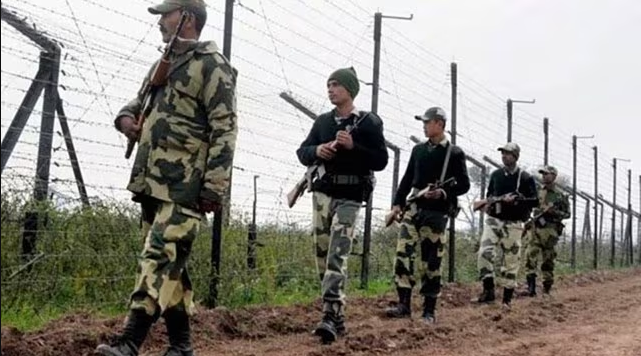
The Indian government directed its resources into building an "anti-cut and anti-climb" border fence which will span 1,643 kilometers along its Myanmar frontier during the next decade. The initiative conducts three vital operations by restricting illegal entry and developing border protection mechanisms while tracking individuals who cross borders. The border fence project encounters opposition from the Naga and Kuki-Zo ethnic communities since they believe the initiative will sever familial bonds and cultural relations.
Introduction: 

  • The Border Fencing initiative includes major aspects such as fencing 1,610.2 kilometers of border with Myanmar through an "anti-cut, anti-climb" barrier during the next ten years.

Project Scope and Cost:

  • Total length of fencing: 1,610.2 km

  • Total cost: ₹31,031.9 crore

  • Government projects 1,467.5 kilometer road construction for improved accessibility across the region.

  • Surveillance cameras installed on the fence will help improve monitoring effectiveness.

Implementation Progress:

  • The expenditure for border fencing totaled ₹114.09 crore throughout April 1 to December 31 in 2024.

  • Local scientists produced this border fence through development that includes superior security elements.

  • The revised Free Movement Regime (FMR) enables operation of 22 border crossing points from a total of 43 designated entry points.

Regulation and Monitoring:

  • All individuals coming from Myanmar need to use designated reporting locations for border entry.

  • Biometric data collection and issuance of a seven-day border pass

  • Centralized database for tracking movement

Opposition and Concerns

  • Impact on Ethnic Communities:

    • Different indigenous populations located in the border region maintain extensive social relations across both sides of the border.

    • Social ties with economic relationships and the family would be interrupted when the fence was built.

  • Political and Security Concerns:

    • Several commentators believe fencing does not effectively eliminate border security problems in this area.

    • Border fencing might lead to increased tensions throughout the highly unstable northeastern borders.

    • Part of the ethnic conflicts in Manipur originated from the unrestricted border crossings.

  • Free Movement Regime (FMR):

    • FMR began operation in 1968 by granting border residents unchecked passage within 10 km of the border.

    • Restricting this system has created humanitarian risks according to different parties.

Strategic and Geopolitical Considerations

  • India’s Security and Border Management:

    • Indian authorities are pursuing policies to suppress both rebellion and unauthorized border crossing.

    • Border security enhancement serves the purpose of India's counterterrorism strategy.

  • China Factor:

    • Myanmar holds crucial strategic importance for India as it advances its Act East Policy activities.

    • India's investment in Myanmar counters Chinese influence in the region.

    • The Sittwe Port together with Kaladan Multi-Modal Transit Transport Project serve as essential infrastructure projects.

  • Regional Stability and Diplomatic Relations:

    • The nation seeks harmonization between military requirements and diplomatic affairs.

    • Myanmar faces internal uncertainties which affect its bilateral relationships with other nations.

Conclusion and Policy Recommendations

  • Balancing Security and Humanitarian Concerns:

    • Ethnic communities should obtain restricted access to partially fenced border areas.

    • Security officials must activate confidence-building procedures to work with population groups that experience negative effects.

  • Enhancing Regional Cooperation:

    • India should enhance its diplomatic efforts to discuss border protection strategies with Myanmar.

    • Promote joint border management initiatives.

  • Economic and Developmental Approaches:

    • Enhance infrastructure and trade connectivity.

    • The implementation of additional economic opportunities needs to be made available to communities who will be affected by the decision.

The security initiative needs proper consideration of ethnic issues and regional stability when implementing it. Strategic decision-making through integration of security measures with economic growth along with cultural understanding guarantees lasting achievement.

ECI Reconsiders Voter ID-Aadhaar Linkage Amid Privacy Concerns

The Election Commission of India (ECI) now examines voter ID (EPIC) and Aadhaar association after discontinuing this process because of 2015 legal and protection issues. The institutional decision occurred after opposition parties accused the commission of manipulating voter lists while permitting duplicate EPIC identification numbers. Through its impartial election management functions the ECI maintains the democratic processes of India. Through its operations the ECI delivers elections that are fair along with being transparent across all levels.

Background: EPIC-Aadhaar Linking Efforts

  • The Electors Photo Identification Card serves as the acronym for Electors Photo Identification Card along with its common name of Voter ID.

  • 2015 Attempt:

  • The EC started NERPAP as a plan to cleanse voter rolls of duplicate enrollment.

  • Within three months the linking of Aadhaar with 30 crore (300 million) voters was successfully accomplished.

  • The Supreme Court issued its verdict to prohibit making Aadhaar mandatory which resulted in NERPAP being placed on hold during August 2015.

Current Developments

  • The revival of Aadhaar-Voter ID linkage has been discussed by Chief Election Commissioner Gyanesh Kumar with officials from the government.

Government Stand:

  • American voters maintain total freedom to link their information, yet this option does not affect their membership on electoral rolls.

  • The government created no mandatory target date for the Aadhaar-Voter ID linking process.

Key Considerations

A. Social Aspects

  • Pros:

    • Clean voter lists become possible due to the elimination of both bogus voting and duplicate entries within the system.

    • The procedure enhances voting authentication mechanisms and maintains democratic electoral systems.

  • Concerns:

    • Privacy risks and potential misuse of Aadhaar data.

    • Particular populations who face higher risks of losing their voting rights become most vulnerable during this process.

B. Economic Aspects

  • Pros:

    • The process of linking reduces the expenses associated with electoral fraud and fake voter ID production.

    • Election validation procedures become easier through this system making electoral procedures run more efficiently.

  • Concerns:

    • Gender Qualified extensive financial support together with technical requirements are essential to execute this system.

    • The use of digital infrastructure in the voting system presents a challenge to voters with limited access to Aadhaar because it depends heavily on these systems.

Election Commission of India (ECI)

  • The autonomous constitutional authority known as Election Commission of India (ECI) executes administrative duties to conduct elections at all levels throughout India. 

  • Through its work the commission provides open and honest elections which are operated with full transparency across all levels.

Key Facts

  • Established: January 25, 1950

  • Constitutional Provision: Article 324 of the Indian Constitution

  • Headquarters: New Delhi

Composition:

  • Chief Election Commissioner (CEC) – Heads the Commission

  • Two Election Commissioners (since 1989)

Functions & Responsibilities

  • The Commission manages Lok Sabha Rajya Sabha State Assembly and Presidential elections as part of its conducting duties.

  • The organization maintains electoral lists while preparing them for usage.

  • The Model Code of Conduct ensures the regulation of political party and candidate activities.

  • Voter Education & Awareness – Encourages voter participation.

  • Political Party Regulation – Recognizes and deregisters political parties

Conclusion

Linking Voter ID with Aadhaar presents dual advantages for electoral transparency but simultaneously generates issues regarding voter identification protection. By taking a voluntary approach the EC seeks to achieve security measures while protecting individual rights despite ongoing public discussions about data protection and voter disenfranchisement.

RBI Wins Digital Transformation Award 2025 for Pravaah and Sarthi Initiatives

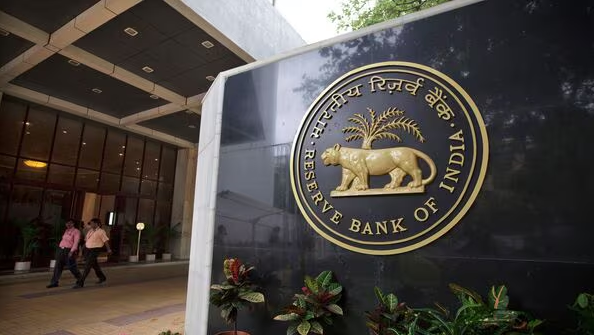
Within the community of Central Banking in London the Reserve Bank of India (RBI) earned its Digital Transformation Award 2025 for developing revolutionary digital projects named Pravaah and Sarthi. The paper-based submission processes at RBI have diminished substantially while workflows became more streamlined and operational efficiency rose markedly because of these initiatives. Prime Minister Narendra Modi expressed his appreciation to the RBI while recognizing digital innovation as a key factor for achieving stronger financial systems in India.

Key Highlights

Recognition & Award

  • An international institution known as Central Banking in London awarded the “Digital Transformation Award 2025” to RBI.

  • The award supports RBI's commitment to improve internal and external operations through digitization strategies.

What is Sarthi?

  • The digital platform Sarthi started serving RBI operations in January 2023 under its ‘charioteer’ name in Hindi.

  • Sarthi offers protected document repositories alongside better record management systems and also enables data analytics operations.

  • The platform increases operational performance by requiring automatic report generation and dashboard creation.

What is Pravaah?

  • Pravaah (smooth flow in Hindi) will start operating in May 2024 as an interface which allows external users to electronically file their regulatory documents.

  • This system integrates with Sarthi database functions to deliver both quick paperless regulatory request processing across the database.

  • The system implements unified cybersecurity elements together with tracking procedures which improve system security and provide complete transparency.

Impact of Digital Initiatives

  • The system eradicates paper-dependent procedures which creates a sustainable efficient governance system.

  • The system creates transparent processes for all aspects of regulatory applications together with decision-making activities.

  • Workflow automation through this system provides fast benefits to employees of RBI as well as external stakeholders.

About Reserve Bank of India(RBI):

Establishment & Evolution

  • The Bank received its official establishment date on April 1. 1935 after Hilton Young Commission recommendations from 1926.

  • Before 1949 it operated as a private institution before the Government of India took ownership.

  • Sir Osborne Arkell Smith became the first Governor of RBI before Sir C.D. Deshmukh took over as the first Asian Governor of the institution.

Organizational Structure

  • 21-member Central Board of Directors, including:

    • Governor (Head of RBI)

    • 4 Deputy Governors

    • 2 Finance Ministry Representatives

    • 10 Government-nominated Directors

    • 4 Local Board Directors represent the regions of Mumbai Kolkata Chennai and Delhi.

Primary Functions of RBI

  • Monetary Authority

    • RBI puts monetary policy into practice to achieve stable prices and economic growth.

  • Regulator & Supervisor of Financial System

    • The institution requires financial institutions to follow specific rules which create trust with the public while defending deposited funds and providing economical banking options.

  • Foreign Exchange Management

    • The institution leads the administration of Foreign Exchange Management Act (FEMA), 1999 with the purpose of promoting external trade and foreign exchange stability.

  • Issuer of Currency

    • Through its issuance function the Indian Rupee gets distributed to the market space while the operation manages circulation to provide enough quality currency notes along with coins.

  • Payment & Settlement System Regulator

    • The institution creates new and advanced digital and banking payment systems to provide secure, efficient transactions.

  • Developmental Role

    • The institution plays a key role in advancing national economic initiatives by working to include more people financially and build infrastructure and provide access to credit.

  • Banker to the Government

    • The institution handles public debt administration as well as treasury operations and government account maintenance.

  • Banker to Banks

    • The organization maintains scheduled bank accounts while providing assistance when such banks need financial support.

Conclusion

RBI’s Digital Transformation Award 2025 shows India’s dedication towards strengthening both digital governance and financial system evolution. Sarthi and Pravaah enable the RBI to establish new standards of efficient central banking through their implementation of modern technological solutions. India redefines its fintech and regulatory technology leadership by implementing these key digital financial ecosystem programs.

India – New Zealand Announce Launch of FTA Negotiations

India and New Zealand started official Free Trade Agreement negotiations to develop economic joint ventures and improve bilateral commerce. The negotiation for an FTA comes after India achieved a similar agreement with Australia during 2022. The FTA targets three main goals which include strengthening supply chains, enlarging business opportunities and making economies more resilient. The volume of trade between India and New Zealand has experienced changes since India achieved yearly export increases of 5% resulting in $682M in 2023 exports while New Zealand exports lowered to $369M. The total value of the trade reached $1.75B as India focused on expanding its service sector operations. The main export products from India consist of pharmaceutical products, wool items and metallurgical scrap materials. The parties resumed FTA negotiations after a decade-long suspension to boost their trade framework and service connections as well as investment relationships.

Key  Points

Official Announcement

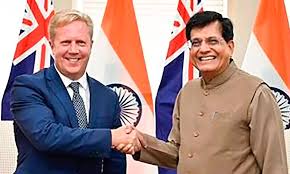
  • The announcement took place on March 16, 2025 when Piyush Goyal, the Indian Commerce Minister met with New Zealand Trade Minister Todd McClay in New Delhi.

  • The negotiation for this Free Trade Agreement took place shortly before New Zealand PM Christopher Luxon led his official visit to India.

Bilateral Trade Scenario

  • The economic exchange between the countries reached $1 billion during the period from April 2024 until January 2025.

  • Trade between India and New Zealand experienced a significant shift as the initially positive $203 million surplus turned into a decreased $33 million surplus during 2024-25 due to rising import numbers.

Key Trade Sectors

  • India’s Exports to New Zealand: Pharmaceuticals, machinery, textiles, pearls, and precious stones.

  • India’s Imports from New Zealand: Wool, iron & steel, fruits & nuts, aluminum.

Indian Business Presence in New Zealand

  • HCL Technologies along with Infosys and Tech Mahindra maintain business operations in New Zealand.

  • The Indian banking sector includes operations of Bank of India and Bank of Baroda through their local branches.

Objective of FTA

  • organizations should work to create a balanced trading system and supply chain connections.

  • New Zealand aims to increase trading opportunities for its companies and consumers throughout markets.

  • This agreement will enhance economic stability and joint economic success of both parties.

Bilateral Relations and Cooperation

  • Diplomatic Ties: Established in 1952, with growing engagements in trade, education, and cultural exchanges.

  • Agreements: MoUs in trade, taxation, civil aviation, education, and scientific research.

  • Educational Collaboration: The India-New Zealand Education Council fosters academic partnerships and student exchanges.

  • Science & Technology: Joint research in food, dairy, ocean science, and polar research.

  • The Indian population active in New Zealand business combines with their substantial influence on cultural integration throughout the nation.

Trade Relation Between India and New Zealand

  • The yearly export growth rate of Indian exports to New Zealand remained at 5% throughout 2018-2023.

  • Total Trade Value amounting to $1.75 billion exists between both nations while India maintains a $0.91 billion market share and NZ follows with $0.84 billion.

  • In 2023 India achieved minimal trade surplus with New Zealand worth US$ -78.26M (almost the balance was in favor of India).

  • The countries initiated fresh talks about forming an FTA after stopping negotiations during the previous decade to advance trading and service connections and investment opportunities.

Last Five Year Trade between India and New Zealand

Year

India's Exports to NZ (US$M)

New Zealand's Exports to India (US$M)

Total Trade (US$B)

Trade Balance (US$M)

2018

534

693

1.23

-159

2019

2020

2021

2022

2023

682

369

1.75

+313

2024

Slight Decline

Growth

-78.26

Key Exports Between India and New Zealand (2023)

India’s Exports to New Zealand

New Zealand’s Exports to India

1.Pharmaceuticals (Packaged Medicaments)

1.Wool

2.Refined Petroleum

2.Scrap Iron

3.House Linen

3.Scrap Aluminium

Note: Services Trade (2018): NZ exported $3.46B in services to India, mainly Travel ($3.34B).

Strategic Significance

  • New Zealand holds extensive importance as a partner entity for agricultural and dairy sectors and information technology services.

  • The educational and research exchange programs create advantages for scholars and students.

  • Sports activities mostly rugby along with cricket together with tourism help New Zealand build stronger cultural relationships with other countries.

  • Joint efforts on climate change and sustainable development in global forums.

Conclusion

India-New Zealand FTA negotiations represent a vital moment that advances their entire diplomatic relationship. Economic cooperation together with trade ties and cultural development will create stronger bilateral collaboration between India and NZ. Moving ahead, both parties need to prioritize strategic investment promotion together with educational exchanges while expanding tourism exchange and establishing collaboration for worldwide challenges to obtain mutual benefits.

Frequently Asked Questions (FAQs)

The current affairs cover recent national and international events related to UPSC, SSC, Banking, Railways, and State PCS.

You need to read about the current affairs daily, and revise them every week and every month to keep them longer in your memory.

Yes, Class24 provides free downloadable Daily Current Affairs PDFs for easy revision.

Yes, you can practice MCQs and quizzes to boost your exam preparation.

Absolutely. The content is written in simple, easy-to-understand bilingual language suitable for beginners.

Go to class24.com and click on the current affairs section directly, where you find everything that you need.

ssc-toppers

Start Learning Today with Class24

Related current affairs

Class24 offers free video lectures for smart preparation, covering CGL, CPO, CHSL, MTS, and GD exams. Learn from expert faculty, revise concepts easily, practice with PYQs, and improve speed and accuracy through high-quality, exam-focused video lessons anytime, anywhere.

Get success in your hand. Start study anytime anywhere.

The journey becomes simple and enjoyable when you start taking interest in it. And through our app “Class24”, we will be your trusted partners in developing that interest.

Daily Quizzes
Mock Tests
Ongoing

No ongoing tests right now.