
Day: March 12, 2025

India-Mauritius Relations: Strengthening Strategic and Cultural Ties

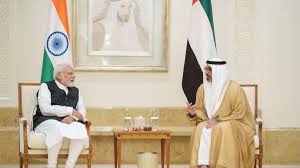
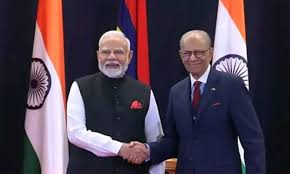
During his visit Prime Minister Narendra Modi reinforced the longstanding historical foundations and cultural ties between India and Mauritius together with their strategic diplomatic relationship. The March 12 national celebrations received PM Modi as Chief Guest to meet President Dharambeer Gokhool along with Prime Minister Navinchandra Ramgoolam for talks about strengthening partnerships between their nations across military defense and trade sectors as well as infrastructure development and maritime security and cultural exchanges.

Key Descriptive Points:

1. Historical and Cultural Ties

  • Mauritius hosts 70% of its citizens who have Indian origins because of French and British rule policies to bring indentured laborers.

  • Mahatma Gandhi’s visit in 1901 inspired political awareness and education movements among Indians in Mauritius.

  • Mauritius celebrates its National Day on March 12 which marks the same date as Gandhi’s Dandi March while celebrating their historical connection.

2. Strategic and Geopolitical Importance of Mauritius

  • Because its positions within the Indian Ocean Mauritius plays an essential role for Indian maritime security as well as trade routes and regional diplomatic efforts.

  • To reduce China's growing influence in the area India seeks to build diplomatic relationships between Mauritius and other Indian Ocean countries.

  • Indian support enabled Mauritius to build transport and defence installations on Agaléga island thus strengthening their maritime security capabilities.

3. India-Mauritius bilateral cooperation

A. Economic and Developmental Cooperation

  • The country of India has dedicated $1.1 billion through credit lines and grants to Mauritius.

  • India financed major projects like:

  • India invested $1.1 billion to develop the Metro Express Project which modernized the public transportation system.

  • India invested $1.1 billion into the development of Mauritius through both grants and investment credit lines to build 96 smaller infrastructure projects that included medical facilities together with new road systems.

  • The implementation of water and sanitation projects has led to better life standards for local residents.

  • Mauritius joins only Singapore in supplying Foreign Direct Investment to India at this time.

B. Defence and Maritime Security Cooperation

  • The leaders of India and Mauritius work toward strengthening their defense partnerships through agreements about white-shipping information exchange for maritime observation.

  • The recently established Agaléga airstrip and jetty in February 2024 enables Mauritius to monitor its Exclusive Economic Zone (EEZ).

  • The Indian government provided support during both Cyclone Chido and the Wakashio oil spill emergencies to Mauritius.

C. Space and Technological Collaboration

  • The space cooperation relationship between India and Mauritius started in 1986.

  • ISRO together with Mauritius Research and Innovation Council (MRIC) reached an MoU in 2023 to develop a collaborative satellite project.

D. Cultural and Educational Cooperation

  • Since the establishment of ITEC by India there have been 4,940 Mauritian experts who underwent training through this program in different professional fields.

  • A total number of 2,300 Indian students enroll in educational programs at Mauritian educational institutions with a main focus on medical studies and business management.

  • Mauritius dedicates special celebration to Indian festivals including Maha Shivratri along with a famous Indian pilgrimage site at Ganga Talao.

Significance

1. India-Mauritius diplomatic relations represent a core component in India’s operational foreign policy framework.

  • Mauritius maintains a central position as India conducts its diplomacy within the local region under its Neighbourhood First Policy.

  • Cooperation between India and Mauritius in defense allows countries to counter the increasing Chinese presence in the Indian Ocean region.

  • Trade & Investment Expansion: India’s Comprehensive Economic Cooperation and Partnership Agreement (CECPA) with Mauritius (2021) boosts economic ties.

  • The population of Indian descendants in Mauritius connects India directly to both cultural relationships and diplomatic channels.

2. Challenges in India-Mauritius Relations

  • The increased Chinese economic engagement with Mauritius through expanded infrastructure investments attempts to reduce Indian influence.

  • The issue of sovereignty regarding Agaléga Island has been addressed by Mauritius as they dismissed reports about an Indian military base on the island.

  • The CECPA agreement fails to overcome trade barriers because bureaucratic regulations together with regulatory hurdles impede trade expansion.

Conclusion & Way Forward:

The historical economic and social links between India and Mauritius turn the small nation into a vital strategic partner for India as it builds its presence across the Indo-Pacific space and Indian Ocean Region (IOR).

1. Strengthening Economic Ties

  • Widen the scope of CECPA to encompass novel trade areas at the same time as supporting policies to encourage Foreign Direct Investment.

  • Support companies to establish cooperative business ventures which combine resources in IT services as well as fintech and tourism industries.

2. Defence organizations together with maritime security institutions need to deepen their partnerships

  • The expansion of white-shipping agreements will achieve better maritime surveillance capabilities.

  • The naval forces should develop enhanced cooperative training activities that combat piracy and also fight illegal fishing activities and prevent smuggling.

3. Boosting People-to-People and Cultural Engagements

  • The government should expand education and professional training programs through scholarships available for Mauritian students and their professionals.

  • The nation should support Indian cultural events and academic student exchanges throughout the year.

4. Enhancing Space and Technological Partnerships

  • The countries should work together to speed up their satellite initiative for climate surveillance and disaster prevention systems.

  • India and Mauritius should develop strategic economic and cultural partnerships to establish a beneficial alliance between their nations which supports peace and stability as well as regional development in the area.

Soil Fertility Mapping in India: Transforming Agriculture with Digital Insights

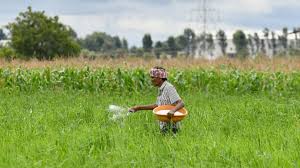
The Soil & Land Use Survey of India (SLUSI) under the Department of Agriculture & Farmers’ Welfare performs district and village-level digital soil fertility mapping with geo-spatial techniques for the Government of India. The digital soil fertility maps derive their information from Soil Health Cards to help farmers receive precise soil nutrient data along with fertilizer recommendations from the Soil Health & Fertility Scheme.

Soil Fertility Mapping Exhibits All these Main Attributes

Soil Health Card (SHC) and Integrated Nutrient Management (INM)

  • Grassland Covers returns information to farmers about their soil conditions by classifying them into low medium or high nutrient ranges.

  • The given recommendations help farmers apply nutrients correctly to avoid excessive fertilizer usage.

  • Through INM farmers should use chemical fertilizers together with organic manure alongside bio-fertilizers for soil health protection.

Digital Mapping and Geospatial Techniques

  • The collection system using GPS manages to determine precise soil locations.

  • The system provides distinctive QR codes that enable tracking of all samples.

  • Artificial Intelligence supplements remote sensing capabilities with data analysis functionality to boost the exactness of soil health monitoring.

  • The initiative of Soil Fertility Mapping has led to the successful generation of 351 maps distributed across 34 districts of Maharashtra.

Benefits of Soil Fertility Mapping

  • Precision Agricultural services provide site-specific nutrition recommendations to farmers to avoid both fertilizer waste and deficiency.

  • The practice generates financial savings by using fertilizers effectively which produces high crop production while requiring reduced inputs to boost farmer profits.

  • Sustainable Soil Management practice performs dual functions by stopping soil damage along with preventing nutrient loss thus sustaining agricultural productivity duration.

  • Better planning decisions emerge from improved soil health management because policymakers and agricultural developers can create more effective policies through the help of this approach.

Challenges and Solutions

  • Logistical Barriers in Remote & Hilly Areas – Addressed through Village Level Soil Testing Labs and Mini Labs.

  • Farmers lacking awareness can find soil health reports through SHC portal by using mobile phone numbers.

Way Forward

  • Expansion of soil fertility mapping activities needs to happen throughout all the states and union territories of India.

  • Soil health management benefits from satellite and AI applications for real-time soil tracking systems.

  • The local testing infrastructure needs expansion to deliver services to a broader range of areas.

Conclusion

Soil Fertility Mapping stands as a modern agricultural advancement which provides farmers with scientific information about soil health to support sustainability and profit in Indian agriculture.

Why Was Ex-Philippine President Rodrigo Duterte Arrested? ICC Investigation Explained

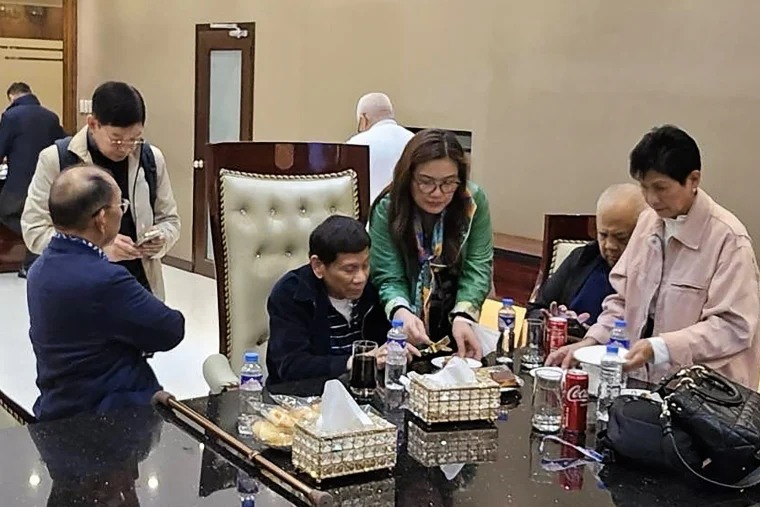
International Criminal Court authorities arrested Philippine ex-President Rodrigo Duterte following the issuance of their arrest warrant. The prosecutor issued warrants for crimes against humanity because of his so-called "war against drugs" in office (2016-2022). National governments must take no action before the ICC gains jurisdiction to prosecute such cases. While Duterte removed the Philippines from ICC membership in 2019 the organization continues its investigation of him regarding crimes it investigated during the time the country was an ICC member. His future arrest will create major political and legal effects as well as public social consequences for the Philippines and the wider international sphere.

Key Points:

1. Background of the Case:

  • During 22 years as Davao City mayor Duterte pursued his political path until he gained Philippine presidency in 2016.

  • Duterte based his entire political journey along with his presidential run on enforcing rigid law enforcement policies.

  • He started his presidency by implementing an intense anti-drug operation where authorities documented more than 6,000 people killed in action. Human rights organizations created a higher count of individuals who died due to the anti-drug campaign.

  • A United Nations investigation revealed that drug war victims mostly comprised young urban males of the poor population.

  • Sources show that the police used death threats against suspects to extract forced confessions that led to their death.

ICC Investigation and Legal Proceedings:

  • The ICC recognized human rights violations in their records during 2016.

  • In 2021 government investigators initiated their examination to focus specifically on cases that happened between November 2011 when Duterte was in office and March 2019.

  • In 2019 Duterte chose to withdraw the Philippines from the ICC in order to prevent his prosecution. The ICC continues to exercise legal power over incidents that took place before the date the country withdrew from ICC jurisdiction.

  • The ICC initiated its investigation after Duterte denied all allegations which resulted in an arrest warrant being issued.

Political Impact:

  • The arrest of Duterte takes place when his relationship with President Ferdinand Marcos Jr. stands in a delicate state.

  • The presidency of Ferdinand Marcos Jr. began when Sara Duterte who is now Vice President supported his campaign victory.

  • ThePHP's leader Marcos Jr. along with his vice president Sara have developed political divergences primarily concerning American and Chinese foreign policy matters.

  • Marcos Jr. adopted a different approach to ICC investigators when he allowed them access to Philippine territory in 2023 after Duterte had blocked their admission.

  • During the previous year the Philippine House of Representatives conducted a formal investigation about the drug war processes implemented by Duterte.

Historical Context:

  • Throughout its history the Philippines has experienced leaders who maintain strict measures to combat crime.

  • The leadership approach of Duterte demonstrates similarities to the policies of former ruler Ferdinand Marcos Sr. during his implementation of martial law in the 1970s.

  • Regular debates concerning human rights abuses along with security versus civil liberties exist in this nation.

Social Implications:

  • The anti-drug war of President Duterte primarily targeted poor and disadvantaged social strata throughout the Philippines.

  • At present victims' relatives search for justice concerning the unlawful executions carried out by authorities.

  • The arrest reignites discussions about state-sponsored violence and the accountability of public officials for human rights violations.

Conclusion

The ICC utilizes Duterte's detention to demonstrate its critical position in worldwide justice operations through international institutions that pursue leaders accountable for crimes against humanity. Although this development highlights human rights protection it causes debate about how states should respect national sovereignty as well as ways to enforce international laws. Inside the Philippines this international arrest may transform both political groupings along with electoral tactical approaches.

New, Greener Electrochemical Process Turns Urine into Plant Fuel

Scientists have invented an electrochemical system to turn urinary urea into the crystalline substance percarbamide. The innovative technology allows effective treatment of urine wastewater while recovering agricultural resources from it. The advanced extraction method reaches near perfect purity levels of percarbamide production for delivering slow-release nitrogen fertilizer alongside its ability to improve soil oxygen levels.

Key Points

Historical Context

  • The alchemist Hennig Brandt accomplished his discovery of phosphorus during his attempts to extract gold from urine in the 17th century.

  • Scientists recognize "liquid gold" as urine because it consists of phosphorus and potassium along with nitrogen and these elements are vital nutrients for plant growth.

Breakthrough Electrochemical Process

  • Scientists developed an energy-wise procedure that produces urea as percarbamide solids.

  • Catalysts made from graphitic carbon help transform urea into percarbamide using electrochemical processing inside the same system.

  • The formation of percarbamide occurs through two chemical pathways by using hydrogen bonding with hydrogen peroxide.

Agricultural and Environmental Benefits

  • The slow release method of supplying nitrogen through fertilization enhances plant growth by benefiting roots and their respiration.

  • The proper management of wastewater becomes more efficient because it helps reduce nitrogen pollutants from urban waste.

  • Human waste becomes an important agricultural commodity through this process while the nitrogen cycle completes itself.

  • The process requires lower energy consumption than typical techniques while preserving an environment-friendly and expandable system.

Challenges and Future Scope

  • This technology needs additional development to achieve large-scale deployment as an operational framework.

  • People generally hold negative viewpoints about using urine-derived fertilizers as a result of social beliefs.

  • Analysis of synthetic fertilizer price versus this technology's price must be done to determine its economic viability.

Significance 

  • Scientists developed this advancement because it supports three of India's goals for sustainable agriculture and wastewater management and circular economy. It complements schemes like:

    • Soil Health Card Scheme – Improves nutrient management.

    • One Nation One Fertilizer (PMBJP) – Ensures uniform branding of fertilizers.

    • Through Atmanirbhar Bharat in Fertilizers India reduces its dependence on synthetic fertilizer imports.

‘One Nation One Fertiliser’ Scheme

  • The Government of India established the One Nation One Fertiliser (PMBJP) scheme to create standardized branding and packaging for all fertilizers nationally. Key points:

  • Each fertilizer company together with State Trading Entities and Fertilizer Marketing Entities must brand their products under the “Bharat” label.

  • Common branding for fertilizers:

    • Bharat Urea

    • Bharat DAP (Di-Ammonium Phosphate)

    • Bharat MOP (Muriate of Potash)

    • Bharat NPK (Nitrogen, Phosphorus, Potassium)

  • Packaging Guidelines:

    • The Bharat brand name and PMBJP logo must take up two-thirds of the fertilizer packet surface.

  • Fertilizer companies have restricted the branding area to a maximum of one-third for their corporate name along with logo and information.

  • A four-month transition period ran parallel to the implementation of new packaging on October 2. Companies needed to eliminate old packaging systems during this period.

Conclusion

The advanced urine recycling system offers sustainable management of urine together with beneficial agricultural fertilizer practices. This efficient urea conversion into percarbamide achieves waste management integration with resource acquisitions in addition to advancing sustainable farming practices.

Bharti Airtel Partners with SpaceX to Launch Starlink Internet in India

The telecom company Bharti Airtel partnered with SpaceX to launch Starlink satellite-based internet services within India. The joint venture between these companies focuses on establishing satellite broadband service for areas that lack proper internet coverage particularly in rural sections and underdeveloped regions. The agreement remains active only after SpaceX obtains regulatory permissions from the Indian government. Indian digital infrastructure develops significantly as the satellite broadband market anticipates expanding to $1.9 billion by 2030.

Key Points:

Partnership Details:

  • The partnership between Bharti Airtel and SpaceX will bring satellite-based internet services from Starlink to their customers.

  • Airtel will offer Starlink equipment through its business service and retail store channels.

  • The initiative establishes a goal to bring internet connectivity to distant locations such as schools together with healthcare facilities.

Regulatory Challenges:

  • Indian security clearance from the Union Home Ministry determines the possibility of executing this agreement with SpaceX.

  • SpaceX made an application for landing rights and various permissions to India's National Space Promotion & Authorisation Centre (IN-SPACE).

  • Indian data and telecommunication regulations stand as a major determining element for successful operation.

Competitive Landscape:

  • The Indian market attracts additional global players who now include Amazon’s Project Kuiper.

  • The domestic telecommunications giant Reliance Jio joined forces with Luxembourg-based SES to enter the satellite internet domain.

  • Bharti Airtel operates its independent satellite business through collaborations with Hughes Communications India and Eutelsat OneWeb.

Market Potential and Growth:

  • The satellite broadband market of India is estimated to expand at a 36% annual rate through the following five years.

  • The satellite internet market analysts forecast the value to grow up to $1.9 billion by 2030 because rural regions require more internet connectivity.

  • The report from Morgan Stanley reveals that데이트 the unconnected Indian households exceed 290.4 million which creates a substantial possibility for satellite broadband services to succeed.

Impact on India’s Digital Economy:

  • The expansion of internet access aids in closing digital inequalities while promoting digital education among the population.

  • The extension of satellite broadband infrastructure will help achieve government programs including Digital India and BharatNet.

  • Smooth internet connectivity controls economic expansion in rural territories through e-governance and remote education and e-commerce possibilities.

Conclusion 

Potential for increased foreign investments in India’s space and telecom sectors. The partnership between Bharti Airtel and SpaceX creates a major turning point for broadband development across India. The approval process's successful outcome will enable Starlink to transform internet access in remote areas which will help Promote digital inclusivity throughout the region. Satellite broadband services in India will be influenced by the combination of domestic and international competition along with regulatory obstacles. Indian plans for technological growth and digital network ubiquity serve as backing for this advancement.

India’s Air Pollution Crisis: A Growing Environmental and Public Health Challenge

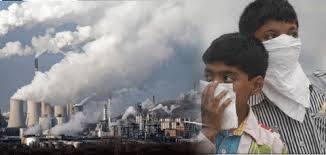
For the sixth year in a row the World Air Quality Report 2024 from IQAir has declared Delhi as the most polluted capital city on the planet. Byrnihat located at the Assam-Meghalaya border takes the title as the world's most polluted city because its measured PM2.5 concentration reaches 128.2 µg/m³. In spite of progress in certain areas India maintains its position as the owner of 13 cities on the list of top 20 most polluted urban areas worldwide. The average PM2.5 levels in India have decreased by 7% but air pollution continues to reach dangerous heights because of four major pollution sources: stubble burning, vehicle emissions, industrial output and construction site dust. The report demonstrates an immediate requirement for immediate policy changes together with tighter regulatory requirements and sustainable urban planning initiatives.

Key Points:

India’s Air Pollution Rankings in 2024

  • The annual PM2.5 level in Delhi has reached 91.6 µg/m³ attributing to its status as global capital with the worst air quality.

  • Byrnihat (Assam-Meghalaya border) leads the world as the most polluted city because it has a PM2.5 concentration level of 128.2 µg/m³.

  • A total of 13 Indian cities among twenty appear as the most polluted areas on the global list.

  • India occupies position number 5 among nations falling into the category of heavily polluted territories while maintaining a PM2.5 reading of 50.6 µg/m³ across the nation.

Major Contributors to Air Pollution in India

  • Stubble burning accounts for sixty percent of air pollution that affects Delhi-NCR regions.

  • Vehicular Emissions: The largest contributor to urban air pollution, particularly in metro cities.

  • Industrial Polluters combining coal power facilities with industrial plants produce sizable amounts of harmful pollutants.

  • The lack of appropriate dust control methods during urban development leads to worsened pollution rates.

  • Wintertime conditions of air stagnation in northern states create detrimental pollution conditions because they trap pollutants in place.

Regional Air Pollution Trends

  • Delhi-NCR & Northern States:

    • Major pollution crises occurred during January as well as November of 2024 across the region.

    • Extreme air pollution levels arose during crop residue burning in the regions of Punjab and Haryana while both regions together with Himachal Pradesh alongside Chandigarh experienced severe pollution conditions.

  • Eastern & Northeastern States:

    • Statistical data showed Byrnihat becoming the most polluted city anywhere in the world.

    • The rise of industrial activities in Assam and Meghalaya produced negative impacts on air quality in the region.

  • Comparative Decline in India’s Pollution:

    • Statistics show that India’s overall PM2.5 measurements declined by 7% from 2023 (54.4 µg/m³) to 2024 (50.6 µg/m³).

    • The air quality in cities surpasses WHO limits by 10 times in multiple locations.

Health Impacts of Air Pollution

  • Respiratory Diseases: Increased cases of asthma, bronchitis, COPD (Chronic Obstructive Pulmonary Disease).

  • Heart attacks and strokes together with hypertension conditions present greater risks to individuals.

  • Continued exposure to atmospheric PM2.5 particles leads to higher chances of lung cancer diagnosis and chronic kidney failure.

  • Young people together with senior citizens experience weakened immunity along with delayed pulmonary development and decreased brain function.

Economic Costs of Air Pollution

  • When air quality deteriorates employees become absent from work thereby decreasing productivity at the workplace.

  • Healthcare Burden: Increased medical expenses due to respiratory and cardiovascular diseases.

  • Air pollutants that enter the atmosphere decrease agricultural production together with soil nutritional values.

  • A poor environmental situation functions as a deterrent against both new business perspectives and visitor arrivals.

Government Measures & Policies

National & Regional Policies

  • As part of the National Clean Air Programme (NCAP) launched in 2019 the government wants cities under this initiative to cut their PM2.5 and PM10 concentrations by 40% until 2026.

  • The Graded Response Action Plan (GRAP) (Delhi-NCR) takes action with urgent pollution controls which includes banning construction activities and rotating vehicles through even and odd licenses.

  • Faster Adoption and Manufacturing of Hybrid and Electric Vehicles (FAME-II): Encourages transition to electric mobility.

  • The goal of Green Energy Transition in India includes reaching 50% renewable energy capacity by 2030.

  • State-Level Interventions

  • The governments of Punjab and Haryana work to cut stubble burning by spreading the use of Happy Seeder machines and distributing bio-decomposition tools across the state.

  • The Anti-Smog Towers in Delhi operate as air pollution filtration systems within high-pollution areas.

  • Uttar Pradesh’s Urban Planning: Introducing green belts and vehicle emission control measures.

Challenges in Addressing Air Pollution

  • Policy Implementation Gaps:

    • Weak enforcement of pollution norms in industrial zones.

    • The states fail to coordinate their actions while disposal systems operate at slow speeds.

  • Political & Economic Barriers:

    • The high expense of safer stubble-burning techniques makes farmers avoid adopting them.

    • Industrial lobbying against strict pollution regulations.

  • Inadequate Public Awareness:

    • People fail to understand how to safeguard themselves in polluted air while also maintaining a lack of understanding about eco-friendly methods and clean power solutions.

Conclusion & Way Forward:

The progress made to tackle India's pollution problems has not been sufficient enough to solve the serious environmental threat and public health emergency. Various complementary actions must be taken to address this issue.

1. Strengthening Pollution Control Policies

  • The government should introduce NCAP to additional urban areas while improving its enforcement capabilities.

  • The government should enact tough rules regarding industrial emissions then impose penalties upon detected violators.

2. India needs to develop green energy systems as well as sustainable transportation networks.

  • The country needs to speed up electric vehicle sales while increasing public mass transit systems.

  • The government should use more investments to develop solar, wind and bio-energy projects.

3. Addressing Stubble Burning

  • The national government should give farmers monetary rewards which encourage them to use environment-friendly methods of residue disposal.

  • The wider application of both Happy Seeder technology along with bio decomposers needs expansion.

4. The development of public knowledge coupled with active community action forms an integral part of this initiative.

  • The government should begin broad educational programs which teach the public about pollution reduction measures.

  • Implement citizen-led air quality monitoring initiatives.

5. Enhancing Inter-State & Regional Coordination

  • A joint organizational task force should be created to serve Delhi-NCR and its neighboring states.

Conclusion

The introduction of a system which provides instant air quality tracking alongside emergency plans needs immediate implementation.

India will achieve better environmental sustainability through the combination of strategic policy development along with technological advancements and public engagement.

India’s Growing Economic Footprint in Dubai: A New Era of Bilateral Ties

During the past decade an increasing number of consultants and entrepreneurs alongside businesses from India made Dubai their new base due to its beneficial business policies and tax-friendly system. India has become the leading nation sending Foreign Direct Investment (FDI) to Dubai surpassing traditional FDI powers such as the USA, UK, and France during 2024. Dubai has become a world-class FDI hub because of its strategic policies together with modern infrastructure and pro-investment regulatory system that draws big capital flows while creating new jobs. The trade collaboration with energy partnerships along with strategic investments and diplomatic cooperation between India and UAE continues to strengthen their relations. The relationship continues to encounter economic mismatch in trade but also faces persistent issues connected to regional tensions along with employee rights violations.

India's Role in Dubai's FDI Growth

  • FDI capital from India contributed to 21.5% of the total flow into Dubai during 2024.

  • The FDI capital coming from Dubai experienced a growth of 33.2% which reached $14.24 billion during the year.

  • The position of Greenfield FDI leader remained with Dubai for its fourth consecutive annual period.

  • Indian FDI exceeded the contributions made by the USA which provided 13.7% of funds while France supplied 11% and the UK supplied 10% last year.

  • The latest year recorded 1,117 newly established Greenfield investments in Dubai which became the highest number in its history.

  • The jobs created by FDI increased by 31 percent in 2024 to reach 58,680 total positions.

Why Dubai Attracts Indian Investment

  • Business-friendly tax regime (0% corporate tax on most businesses).

  • Robust infrastructure and connectivity to global markets.

  • The city features pro-investment regulations and simple business procedures.

  • Strategic location as a trade and logistics hub.

  • The business and IT and finance and logistics fields have developed their talent base in Dubai.

Strengthening India-UAE Bilateral Relations

Trade Partnership:

  • The economic trade relationship between UAE and India reached $85 billion (2022-23) to become the 3rd largest in their trading partnerships.

  • Through CEPA between India and UAE the agreement eliminated customs duties for 80% of all merchandise exchanges.

  • The countries strive to increase their non-oil trade volume up to $100 billion by 2030.

  • Investment & Energy Cooperation:

  • UAE makes investments worth $20-21 billion through which FDI amounts to $15.5 billion.

  • Agreements on nuclear energy cooperation, LNG supply, and strategic petroleum reserves.

  • The ADIA Sovereign Wealth Fund of UAE invested资金 in renewable energy as well as Indian infrastructure.

Strategic and Defense Cooperation:

  • Al Dhafra air base in the UAE gives India military refueling facilities.

  • The UAE and India cooperate through multiple joint military drills named Desert Cyclone for the Army and Zayed Talwar for the Navy as well as Desert Eagle for the Air Force.

  • The UAE and India collaborate for counterterrorism measures and they exchange intelligence information as well as work together on maritime security.

Cultural & People-to-People Ties:

  • More than 3.5 million Indians currently reside in the UAE and they make up 35 percent of the total population.

  • The United Arab Emirates stands as one of the major countries from which financial remittances flow to India.

  • The future development plans of Abu Dhabi include constructing both BAPS Hindu temple and IIT Delhi campus.

Significance for India:

  • Economic Growth & Employment Generation:

    • Dubai’s FDI growth benefits Indian industries and entrepreneurs.

    • The employment market of Dubai creates additional positions that suit Indian experts.

  • Energy & Trade Security:

    • The United Arab Emirates (UAE) occupies position four when counting crude oil exporters to India and place two when considering LNG and LPG exports to India.

    • Strategic petroleum reserves serve to protect India against energy security threats.

    • UAE’s role in India-Middle East-Europe Economic Corridor (IMEC) boosts global trade connectivity.

  • Diplomatic Leverage & Regional Influence:

    • Strengthened ties with UAE help India counterbalance China’s influence in the region.

    • UAE supports India’s bid for a permanent UN Security Council seat.

    • The relationship helps India achieve more effective access within the Gulf Cooperation Council (GCC) and Organization of Islamic Cooperation (OIC).

Challenges & Concerns:

  • Trade Imbalance:

    • The trade deficit between India and UAE reached $16.78 billion throughout 2022-23.

    • Food imports from India to UAE may diminish after UAE accomplishes its economic diversification plans.

  • China’s Economic Influence:

    • China's low-cost financial support alongside infrastructure development projects threatens India's market position in the trade sector.

  • Regional Conflicts & Political Dynamics:

    • India faces challenges in their Middle East policies as the Israel-Palestine conflict interacts with UAE's recent diplomatic ties to Israel through the Abraham Accords in 2020.

    • The growing tensions between Iran along with UAE threaten to disrupt Indian trade routes.

  • Labor Rights Issues (Kafala System):

  • The Kafala sponsorship system operated by UAE continues to jeopardize the working conditions of Indian employees.

  • The government of India needs to fight for enhanced labor rights together with stronger legal safety systems.

  • Pakistan-UAE Relations:

    • UAE gives financial resources to Pakistan which transcends into money that supports terrorist groups with hostility toward India.

Conclusion & Way Forward:

The continuous growth of Indian Foreign Direct Investment in Dubai under strengthened UAE-India diplomatic relations creates a vital economic and security chapter in bilateral partnership. It is essential for India to strike the right balance between promoting its trade activities and building diplomatic relationships while protecting workers' rights. India must:

  • Address Non-Tariff Barriers (NTBs): Negotiate with the UAE for transparent trade regulations.

  • A 2+2 strategic dialogue should become operational to strengthen military cooperation between parties.

  • The two countries should expand economic cooperation by focusing on developing renewable energy ventures as well as startups operating in AI and fintech fields.

  • Indian migrants working in the Gulf will be better protected through my advocacy efforts to reform the Kafala labor system.

  • The strategic alliances of I2U2 BRICS and IMEC should be strengthened by India to develop regional influence.

The sustainable development of a long-term strategic alliance between India and the UAE becomes feasible through effective advance solutions for existing obstacles.

New Delhi to Host 20-Nation Security Meet: Key Agendas and Implications

A vital security conference taking place in New Delhi will unite intelligence officers from 20 countries comprising the United States and Canada along with Australia and Germany as well as New Zealand. NSA Ajit Doval conducts the meeting which will concentrate on international intelligence cooperation to tackle terrorism along with transnational crimes and geopolitical concerns like the Russia-Ukraine war and Middle East conflicts. Among the important figures present for the conclave are Tulsi Gabbard who serves as US Director of National Intelligence while Daniel Rogers holds the position of Canada’s intelligence chief and Richard Moore leads Britain’s MI6 organization. Following the conclave there will be the Raisina Dialogue which will carry on with strategic discussions at high-levels.

Context:

  • A vital security event in New Delhi will gather intelligence leaders from 20 countries including the USA, Canada, Australia, Germany and New Zealand.

  • The meeting constitutes an event led by India’s National Security Advisor (NSA) Ajit Doval.

Key Discussion Points:

Enhancing Global Intelligence Cooperation:

  • Agencies will improve their ability to exchange intelligence information for battling terrorism and organized crime activities.

  • Security organizations should enhance their cooperative practices to work together on counterterrorism operations.

  • National security officials discussed methods to handle digital criminal activities and cyber danger threats.

  • The group analyzed strategies for terror financing prevention together with techniques to monitor and stop illicit monetary networks.

Geopolitical Security Challenges:

  • The forum examined both Russia-Ukraine war effects and Middle Eastern conflicts.

  • Strategies exist which work against the threats emerging from non-state actors and rogue nations.

  • The Indo-Pacific intelligence coalition needs to be strengthened for maintaining stability across the region.

  • The assessment of cybersecurity threats that develop from emerging technologies including AI-based cyber threats takes place.

Bilateral and Multilateral Meetings:

  • Tulsi Gabbard’s participation in the Raisina Dialogue and her meeting with NSA Ajit Doval.

  • Ajit Doval is set to engage in bilateral discussions with intelligence leaders of important countries.

  • Intelligence collaboration serves to build both diplomatic relationships and strategic partnerships.

  • Potential collaborations in intelligence training and capacity-building among nations.

India-Canada Diplomatic Strain:

  • Canadian intelligence leader Daniel Rogers joined meetings during times of strained diplomatic relations between India and Canada.

  • The impact of the Hardeep Singh Nijjar case on intelligence-sharing agreements.

  • The discussion points for potential cooperation that Doval and Rogers explored.

  • Examination of recent diplomatic expulsions and their impact on intelligence collaboration.

Historical Context and India’s Role:

  • India’s consistent participation in global intelligence-sharing initiatives.

  • Security conclaves prior to this event mainly concentrated on counterterrorism measures and cybersecurity concerns.

  • Intelligence collaboration continues to develop its response to new global security threats.

  • The national interests of India receive protection through strategies implementing multilateral security partnerships.

India’s Role and Impact:

  • The world perceives India as a top-level intelligence center because it facilitates essential security talks between international agencies and manages global intelligence exchanges.

  • The network of Indian intelligence has proven vital for destroying terrorist groups while providing useful operational intelligence to fellow nations.

  • India uses its strategic position to enhance maritime intelligence and build regional security alliances which are especially reinforced through the QUAD framework.

  • The Indian government implements substantial measures to defend digital space from crime along with cyber warfare attacks and financial risks by joining forces with worldwide partners.

  • India boosts its diplomatic power and improves its status as a leading global security policymaker through conducting prestigious security summits.

Future Security Collaboration Prospects:

  • The QUAD partnership between India and the US and Japan and Australia needs to develop its capacity to exchange intelligence information.

  • Maritime security operations and illegal activity prevention gain increased attention throughout the Indo-Pacific region.

  • Potential expansion of intelligence-sharing agreements with European and Southeast Asian nations.

Conclusion

Law enforcement agencies must develop quick emergency management systems to share intelligence information between them in dangerous situations.

World security challenges require the focus of the coming New Delhi security conclave on intelligence collaboration. India’s commitment to organize these high-level conferences proves its status as a global security forum leader. 

Frequently Asked Questions (FAQs)

The current affairs cover recent national and international events related to UPSC, SSC, Banking, Railways, and State PCS.

You need to read about the current affairs daily, and revise them every week and every month to keep them longer in your memory.

Yes, Class24 provides free downloadable Daily Current Affairs PDFs for easy revision.

Yes, you can practice MCQs and quizzes to boost your exam preparation.

Absolutely. The content is written in simple, easy-to-understand bilingual language suitable for beginners.

Go to class24.com and click on the current affairs section directly, where you find everything that you need.

ssc-toppers

Start Learning Today with Class24

Related current affairs

Class24 offers free video lectures for smart preparation, covering CGL, CPO, CHSL, MTS, and GD exams. Learn from expert faculty, revise concepts easily, practice with PYQs, and improve speed and accuracy through high-quality, exam-focused video lessons anytime, anywhere.

Get success in your hand. Start study anytime anywhere.

The journey becomes simple and enjoyable when you start taking interest in it. And through our app “Class24”, we will be your trusted partners in developing that interest.

Daily Quizzes
Mock Tests
Ongoing

No ongoing tests right now.