



Difference Between JRF, SRF and RA helps candidates identify the distinction between the various research roles in the Indian research system. The journey of a research career in India often begins with the Junior Research Fellowship (JRF), progresses to the Senior Research Fellowship (SRF), and may lead to roles like a Research Associate (RA). Each of these stages has a difference between JRF, SRF and RA in eligibility criteria, responsibilities, stipends, and career opportunities.
The article explores all the individual aspects as well as the difference between JRF, SRF and RA. The candidates must understand all of these different roles in order to plan their preparation for the role they choose as a career.
Also Read: UGC NET Exam 2025
Difference between JRF, SRF and RA Overview
The difference between JRF, SRF and RA mainly lies in the career stage, eligibility, stipend, and responsibilities. To learn more, the candidates must go through the difference between JRF, SRF and RA listed in the table below:
| Features | JRF | SRF | RA |
| Eligibility | Postgraduate degree with a minimum of 55% marks | JRF clearance + 2 years of research experience | PhD degree + relevant research experience |
| Purpose | Starting research leading to a PhD | Advanced research with more independence | Postdoctoral research and project leadership |
| Duration | 2 years | Up to 3 years (after JRF, based on progress) | 1-3 years, extendable based on project needs |
| Monthly Stipend | ₹37,000 (revised from ₹31,000) | ₹42,000 (revised from ₹35,000) | ₹47,000 to ₹54,000; varies by institution/project |
| Selection Process | UGC NET JRF exam | Performance review by an expert committee after the JRF period | Based on doctoral qualifications and interviews |
| Transition | Entry-level fellowship | Upgrade after successful JRF research evaluation | Postdoctoral appointment based on academic merits |
Also Read: UGC NET vs JRF
Key Difference Between JRF, SRF and RA
To understand the key difference between JRF, SRF and RA, we have provided the in-depth details of each of the research positions. The aspirants can go through each of the roles mentioned below to clear out any confusion about the eligibility criteria, age, stipend, and responsibilities for these positions, and understand the difference between JRF, SRF and RA.
JRF Fellowship Details
The Junior Research Fellowship (JRF) is awarded based on the candidate’s performance in the UGC NET exam, allowing scholars to pursue research and PhD programs with a monthly stipend for the first two years. Below are listed all the JRF Fellowship details, right from the eligibility to the benefits:
| Features | Details |
| Educational Eligibility | Master’s degree with a minimum of 55% (General) or 50% (Reserved), Final year students are eligible as well. |
| Age Limit | 30 years (with relaxations for reserved groups). |
| Application Window | December 2025 session: 31 Dec 2025 – 7 Jan 2026 |
| Validity | JRF certificate- 3 years after the result date |
| Stipend/Scholarship | ₹37,000/month for first 2 years (JRF), elevated to ₹42,000/month for next 3 years (SRF) upon assessment. Annual contingency grant: ₹10,000–₹12,000. |
| Duration | 2 years as JRF, followed by 3 years as Senior Research Fellow (SRF), subject to review. |
| Reservation | Category reservation as per the Govt. of India norms; certificates required for relaxation. |
| Cut Off (General) | 40% total marks required (aggregate) for eligibility. Category and subject-wise cut-offs apply. |
| Benefits | Direct preference for Ph.D. admission, monthly stipend, research support, & career advancement in academia. |
| Number of Subjects | 85+ subjects covered, including humanities, social sciences, sciences, professional subjects. |
Also Read: UGC NET JRF 2025
SRF Eligibility Criteria and Benefits
Applicants applying for Senior Research Fellowship (SRF) must have demonstrated significant research progress during their JRF tenure and usually require at least two years of research experience. The SRF position provides greater financial support and encourages more independent research. The details about the SRF eligibility criteria and stipend are as follows:
| Features | Details |
| Eligibility | Candidates must have qualified for JRF and completed 2 years as JRF with satisfactory performance. |
| Selection Process | Elevated from JRF status after assessment of research progress and performance at the 2-year mark. |
| Stipend | ₹42,000 per month (increased from JRF stipend) |
| Duration | 3 years SRF after 2 years as JRF (total 5 years of fellowship, counting both stages) |
| Contingency Grant | ₹10,000–₹12,000 per annum for research expenses available during fellowship tenure |
| Validity | Fellowship valid for 3 years as SRF, must maintain satisfactory progress |
| Benefits | Financial support for advanced research, eligibility for major research projects and PhD funding |
| Reservation | Reservation as per govt. norms applicable for fellowship continuation |
| Evaluation | Annual performance review to continue receiving stipend |
| Career Impact | Enhances research credentials, improves opportunities in academia and research institutions |
Also Read: UGC NET Eligibility Criteria 2025
Research Associate Roles in India
Research Associates (RA) typically hold PhDs and are engaged in advanced research projects, managing experiments, publications, and project deliverables. Their stipend depends on the project and funding agency. The Research Associate roles in India are contractual and often depend on specific research project requirements. To know more about the Research Associate roles in India, explore the table below:
| Features | Details |
| Eligibility | Ph.D. degree or equivalent research experience; sometimes requires research publications |
| Age Limit | Usually around 30-45 years; varies by institution and funding agency |
| Duration | Typically 1-3 years, extendable based on project and funding |
| Stipend | Fixed amount ranging from ₹47,000 to ₹54,000 per month, depending on experience and institution |
| Contingency Grant | Annual contingency grant approx. ₹20,000 per annum to the institution for research expenses |
| Purpose | Conduct advanced research, lead projects, and contribute to academic publications |
| Selection Process | Based on academic qualifications, research experience, recommendations, and sometimes interviews |
| Leave | Leave with stipend up to 30 days per year; maternity leave with stipend for women with less than two children |
| Career Impact | High-level research role, enhanced academic profile, opportunity to lead independent projects |
| Institutional Variance | Awarded by individual research institutions, universities, CSIR labs |
Also Read: What is the difference between UGC NET and JRF?
JRF to SRF Transition Process
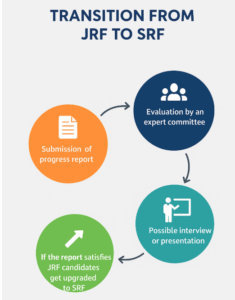
After two years, the Junior Research Fellowship (JRF) candidates undergo a performance review where progress in their research is assessed. The successful candidates get an extension or upgrade to Senior Research Fellowship (SRF) status. The detailed JRF to SRF transition process involves:
- Submission of a candidate’s progress report.
- Evaluation of the report by an expert committee including supervisors and external experts.
- Possible interview or presentation session for the research topic.
- Subject to satisfactory research progress, JRF candidates get upgraded to SRF with enhanced stipend and responsibilities.
Also Read: Benefits of clearing UGC NET/JRF exam
Stipend for JRF, SRF, and RA
The stipend for JRF, SRF, and RA reflects the progressive nature of these roles. To learn more about the difference between JRF, SRF and RA stipend structure, check out the table below and also learn about the additional benefits.
| Fellowship Type | Monthly Stipend | Additional Benefits |
| JRF | ₹37,000 | Contingency grant, HRA |
| SRF | ₹42,000 | Higher stipend post-review |
| RA | ₹47,000 to ₹54,000 | Based on funding/project specifics |
Also Read: UGC NET Salary 2025
Conclusion
Understanding the difference between JRF, SRF and RA is essential for building a successful research career path in India. JRF serves as the entry point for doctoral research, SRF supports mid-level independent research development, and RA positions offer advanced postdoctoral roles with leadership responsibilities. Each phase offers progressive benefits and challenges, requiring dedication and consistent research output. Learn all about the difference between JRF, SRF and RA to understand the responsibilities of each role.
Difference Between JRF, SRF and RA FAQs

What is the JRF to SRF transition process?
Through a performance review after two years, involving a committee assessment, interview, or presentation (if required) of research progress.
What is the stipend for a Research Associate?
Ranges from ₹47,000 to ₹54,000 depending on the project and funding agency.
How long is the JRF fellowship awarded?
Typically 2 years, extendable through SRF for up to 5 years total.
Can a candidate apply directly for SRF?
Yes, in some cases, with relevant research experience and publications as per agency norms.